
St Bartholomew's Primary Academy
Smartphones and Social Media: Our Approach
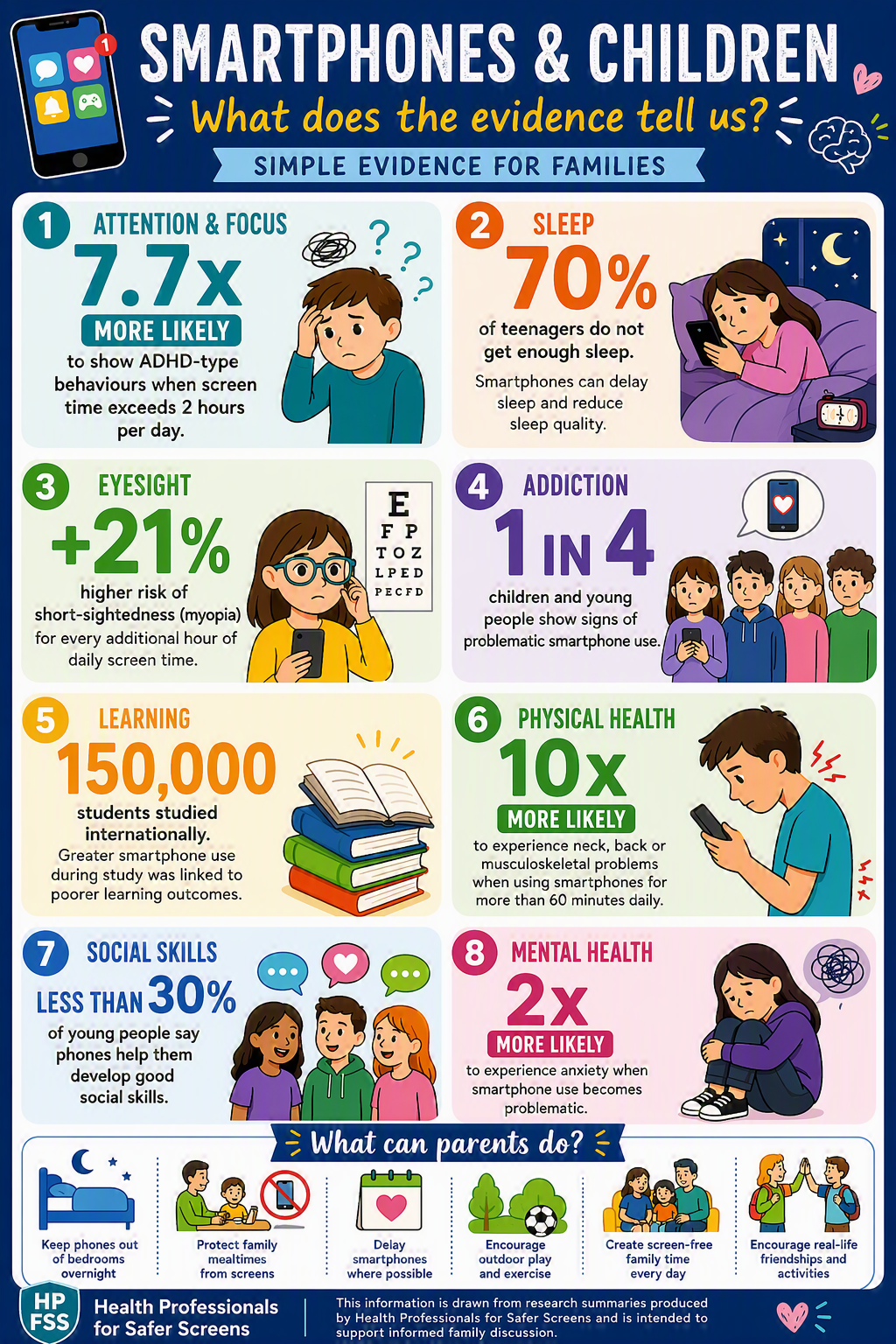 Why?
Why?
Following a survey asking for parental feedback on smartphones and social media, we received 180 responses from families across EYFS to Year 6. The feedback provided a very clear and consistent message.
Parents strongly highlighted concerns about the impact of smartphones and social media on children, particularly in relation to safeguarding, wellbeing and peer pressure. At the same time, responses also recognised that, for some families, phones can play a practical role in supporting safety and independence as children approach secondary school.
This page sets out what parents told us, and how our updated Phone Policy reflects that feedback.
What do we mean by a “smartphone”?
In this policy, a smartphone refers to any device with the potential to access the internet, including phones, smartwatches and similar devices. This is because the safeguarding risks relate to internet access and communication functions, rather than the physical design of the device.
What parents told us
Over 85% of parents expressed concerns about smartphone use, with almost 98% recognising safeguarding risks and over 87% supporting stronger school action or a collective delay in smartphone ownership.
The survey findings were very clear:
- A very large majority of parents are concerned about smartphone use and social media in childhood
- Almost all parents see smartphones and social media as a safeguarding risk
- Most families would feel supported by a stronger school stance
- Most families would also welcome a shared, community approach to delaying smartphones
Parents also highlighted the following key concerns:
- Online bullying
- Sharing of inappropriate content
- Predatory behaviour from adults
- Mental health and wellbeing
- The impact on sleep, attention and real-life social development
Alongside this, parents told us:
- Children can feel pressure to have smartphones because “everyone else has one”
- Families would welcome solidarity so they are not making decisions in isolation
- There is a desire for more guidance, information and education for both children and parents
- Some parents value phones for safety and contact, but distinguish between a basic phone and a smartphone with internet access and social media
There was also strong support for delaying smartphones, with most parents feeling they are not appropriate until at least the end of Year 6, and many preferring secondary age or older.
How the Phone Policy reflects parent feedback
In response to what parents told us, the Trust has introduced an updated Phone Policy from September 2026.
1. A strong focus on safeguarding and wellbeing
Because parents overwhelmingly identified safeguarding as the key concern, the policy establishes schools as:
- Mobile phone-free environments by default
- Spaces where children are not exposed to unfiltered internet-enabled devices during the school day
This helps reduce risks such as:
- Online bullying
- Exposure to inappropriate content
- Unsafe communication or contact
- Negative impacts on mental health and wellbeing
2. Clear, consistent expectations to reduce peer pressure
Parents told us that peer pressure is a significant issue, particularly when children feel they are the only ones without a smartphone.
The policy creates a clear and consistent approach by:
- Not allowing phones in Nursery to Year 4
- Not allowing smartphones on site at any age
- Applying the same expectations to all pupils
This helps create a level playing field and reduces social pressure on families.
3. Supporting the delay of smartphones
The strong parental preference to delay smartphone use is reflected in the policy through:
- The prohibition of smartphones and internet-enabled devices on school site
- The allowance of simple, non-smart phones only in limited circumstances
This supports a shared community approach to delaying access to smartphones.
4. A practical and balanced approach for families
The policy recognises that some families may need a phone for safety or travel as children become more independent.
For this reason:
- Pupils in Years 5 and 6 who travel independently may bring a basic phone for communication only
- These devices must not have internet access or a camera
This allows families to support independence while still reducing exposure to risk. The following website may be of use when choosing the best network for your phone - https://www.ofcom.org.uk/mobile-coverage-checker
5. Respecting parental choice
Parents told us clearly that decisions about smartphone ownership vary between families.
The policy reflects this by:
- Keeping the school environment consistent and safe during the day
- Recognising that decisions about smartphone use at home remain with parents
This ensures families can make decisions that are right for them, while still protecting children in school.
6. Reducing disruption and supporting learning
Parents raised concerns about distraction, screen dependency and reduced focus.
To support this, the policy requires that:
- Any permitted phones are switched off and handed in at the start of the day
- Devices are not accessible during learning time
This helps maintain a calm, focused environment for all children.
Supporting families further
The survey also highlighted a strong desire for guidance and support.
In response, the school will:
- Share information to help parents understand online risks
- Provide practical guidance on managing device use at home
- Signpost trusted resources, including 'Smartphone Free Childhood'
We also continue to review our own systems to ensure that school expectations around technology remain balanced and age-appropriate.
Why are smartphones not allowed on site, even if turned off?
The policy is based on the need for clear, consistent safeguarding expectations. In a busy primary environment, it is not possible for staff to verify whether devices are switched off or how they are configured. By removing internet-enabled devices from the school site altogether, we are able to create a safer, more consistent environment for all children and reduce the risk of misuse, accidental access or peer pressure.
Our shared aim
Across the survey responses, there was a clear sense that families want to work together.
By taking a consistent, community approach, we aim to:
- Support children’s safety and wellbeing
- Reduce peer pressure on families
- Promote healthy development and independence
- Ensure children can enjoy their childhood without unnecessary digital pressures
If you have any questions or would like to discuss this further, please contact the school office. We appreciate that this is a sensitive subject and the intention is to be supportive. We would always prefer to discuss matters face to face.